Jan 15, 2026
Written by
Kai-Rhie Terry
Attorney Reviewed by
Daniel Ruskin on January 13, 2026
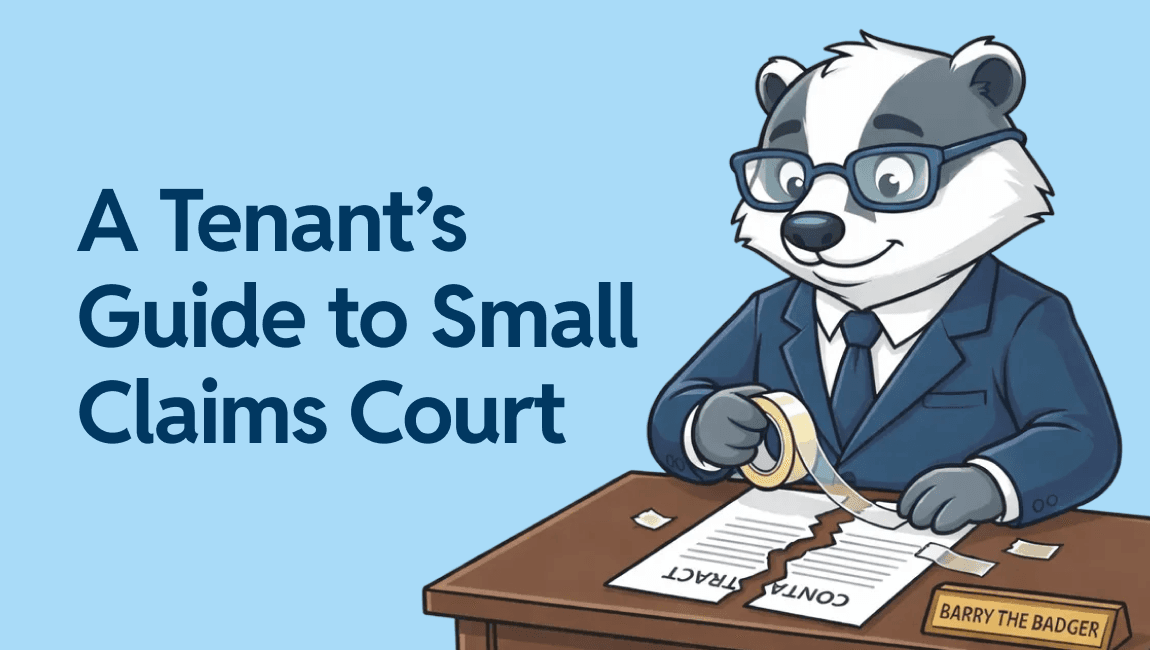
If your landlord won’t return your security deposit after you’ve sent a demand letter, small claims court is often the next step. Small claims court is designed for normal people and there are usually no lawyers required. In small claims court, you can ask a judge to order your landlord to return your money.
Who to Sue
You must sue the right landlord and you may need to include the property manager too if they handled the deposit funds. The landlord is typically the name listed on your lease agreement. If the landlord is an LLC or property management company, that entity should be named in your claim.
Ways a landlord's legal name might be shown:
123 First Street LLC
Big City Property Co
Sky Residential Management, Inc
Triton Property Management Partners
Barry the Badger’s Tip: Suing the wrong party can delay or dismiss your case, so remember to double check the lease and payment records before filing.
How to File a Small Claims Case
You file in the small claims court located in the county where the rental property is located. There’s usually a filing fee, and many courts offer online filing.
Here’s what you’ll need:
The landlord’s legal name and address
The rental property address
The amount you’re owed
A brief description of how the landlord violated the law
Barry the Badger’s Tip: Some states require you to send a demand letter before you sue.
How to Serve Your Landlord
After filing, your landlord must be formally served with court papers. State and/or local laws will determine the proper way to serve your landlord. Service is usually done by: a sheriff, a process server, or certified mail. Always double check your local/state laws to find the proper way to serve your landlord. Proof of service is required for your case to move forward.
Can You Settle Before Court?
Yes, and many cases do settle before going to trial. Landlords often try to resolve the issue once they’re served. If you decide to settle your case: get the agreement in writing, set a clear payment deadline, and don't dismiss the case until payment is received.
And should you need help understanding if accepting your settlement is the right route, TinyGavel has a service where a lawyer (in Utah) or case specialist (in other states) can review it for you and ensure you’re getting a fair offer!
Evidence to Bring to Your Hearing
Bring documents that show the security deposit belonged to you and the landlord failed to follow the law. Bring at least two copies of these documents.
Examples of evidence:
Lease agreement
Proof of security deposit payment
Move-out photos and/or videos
Demand letter and proof it was sent
Itemized statement or deductions (OR Proof that it wasn’t provided)
Emails and text with the landlord
To get ready for your hearing, you should draft a timeline of events and rehearse explaining how the landlord violated the law.
What to Expect at the Hearing
Small claims hearings are short and informal. Each side explains what happened and the judge may ask questions. The judge may decide immediately or they may take it under advisement in which case, you’ll be notified by mail of their decision.
Barry the Badger’s Tip: On your day in court, be on time (the earlier, the better), be respectful to the judge, remain calm, and answer questions directly.
What Happens If You Win?
If you win, the judge will issue a judgment stating how much the landlord owes you. Depending on your state/local laws, you may be entitled to and awarded more than the amount wrongly withheld if it’s proven your landlord broke the law.
If the landlord doesn’t pay voluntarily, you may need to take steps like wage garnishment or placing a lien on property.
What Happens If You Lose?
If you lose, the case usually ends. You typically won’t recover your filing fee, but you also won’t owe the landlord money unless the judge orders it.